Your ecommerce store
A take-back offer at checkout and after delivery, tied to the customer's account.
- A few lines of JavaScript, or a hosted take-back page
- Credit issued into their wallet with you
- Live without touching your warehouse
Stay in your customer's wardrobe long after the first sale. Tooused runs the collection, sorting and reporting behind trade-in and take-back across 700+ Indian cities. You issue the credit and keep the repeat order.
Go Live in under a week 4 lakh+ customers served
We handle Clothes from these brands every day


Four steps on the ecommerce flow, which is the fastest to launch. Retail works the same way from the drop-off point onward.
Install our JavaScript code or link to a custom page. A take-back option appears at checkout, in the order confirmation and in the customer's account.
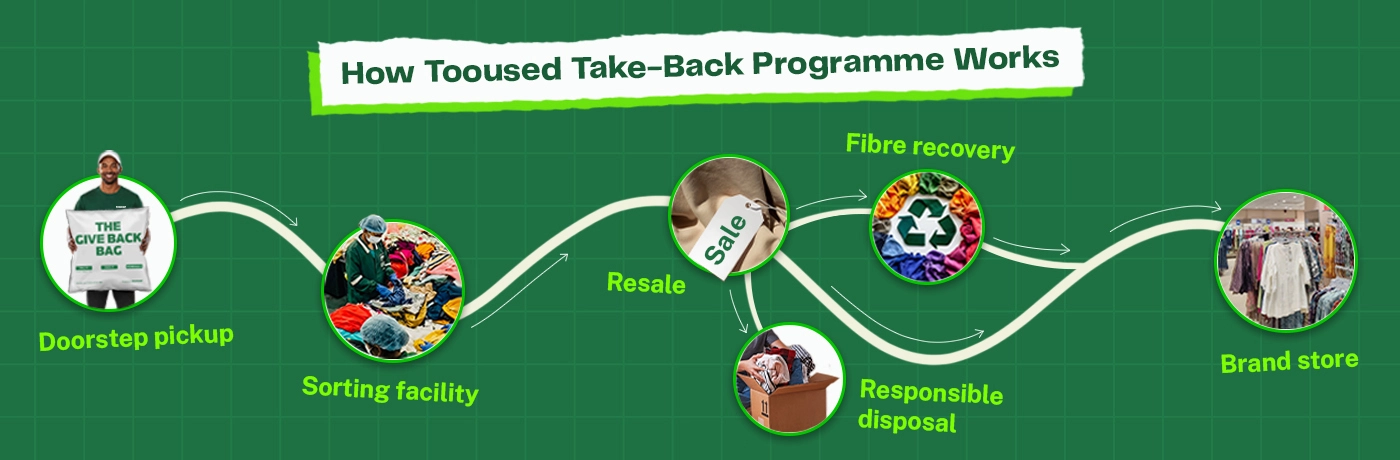
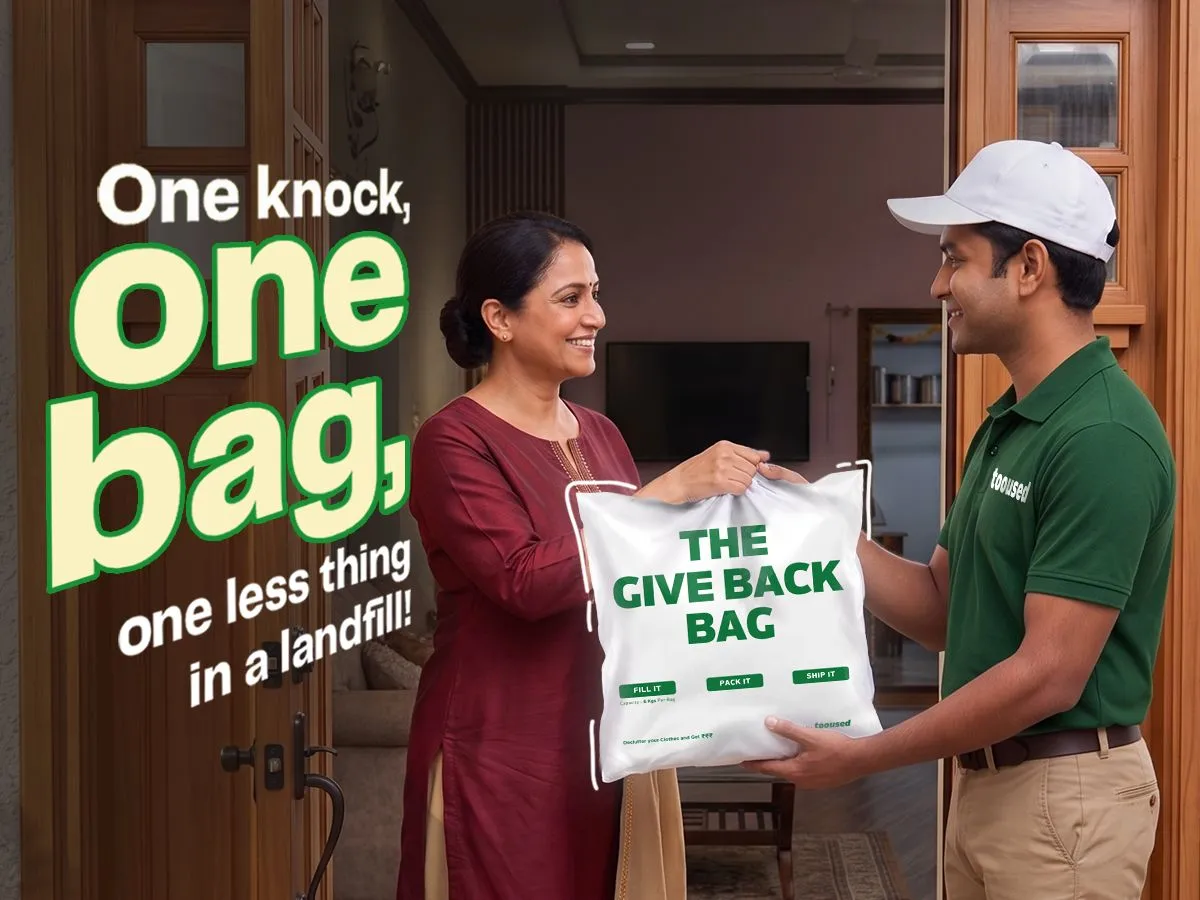
They pick a slot and we collect from their door across 700+ cities. Same-day collection in Delhi NCR, next available slot elsewhere.
Every bag is opened, counted and graded at our facility. Each movement is logged from collection through sorting to final destination.
Store credit lands in their account with you. You get weights, piece counts and destinations, formatted for reporting.
Start online. Add physical drop-off when the digital flow is settled. The same collection grid sits behind all three.
A take-back offer at checkout and after delivery, tied to the customer's account.
In-store drop-off, logged against the customer at the till.
The same drop-off flow in stores you do not own.
Treated as CSR it is a cost line. Run properly it is a repeat-purchase channel that happens to produce the compliance record you will be asked for later.
Credit that only spends with you, issued the moment a customer clears out their wardrobe. It gives you a reason to contact people who have not opened your app in months, and it comes back as an order rather than a thank-you.
Weights, piece counts and destinations by month, city and channel. EPR already covers plastics and electronics in India and textiles are widely expected to follow, so the record starts building now.
Every garment tracked from collection through sorting to where it ended up. If you are going to make a circularity claim, this is what stands behind it.
We own the collection grid, the sorting facility and the partner network. No trucks, no warehouse space, no reverse logistics hire, and nothing to change in your fulfilment stack.
We are not proposing to build this for you. It has been collecting, sorting and reporting for two years.
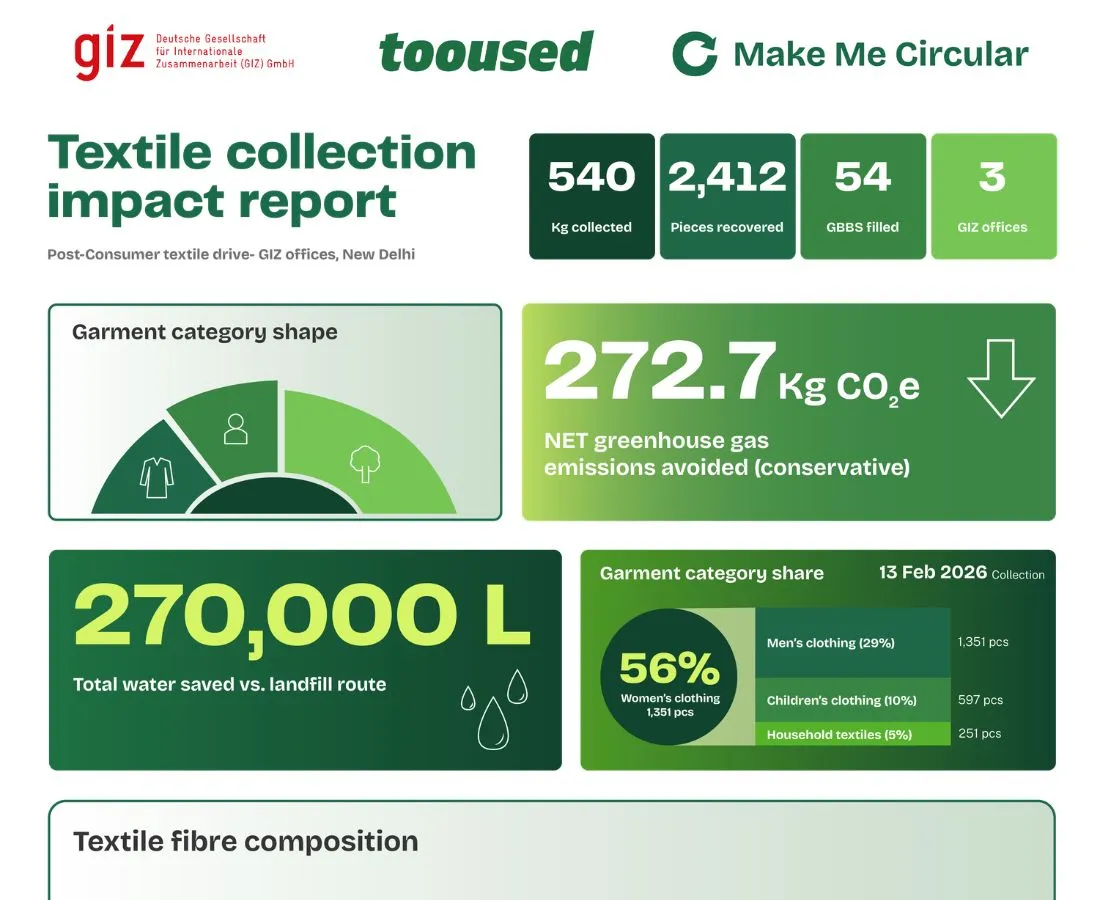
A take-back programme needs more than a total number of clothes collected. Brands need to know how many bags and garments came back, how much they weighed, where they were collected, and where they went after sorting.
Tooused already produces this level of textile collection and impact reporting for institutional partners. Our GIZ India and AFFWA projects reports record bag counts, garment counts, weights and destinations city by city. We can apply the same reporting approach to your brand’s take-back programme, giving your team a clearer record of collection activity and the outcomes for the textiles you recover.
Want to see what the data looks like? Ask for a redacted sample report on the call.
Your call. Some brands cover it and treat it as an acquisition cost against the credit issued. Others pass a small booking fee to the customer, which covers collection in full. We will model both against your volumes.
Your call again. Accepting any brand gets far more participation and more credit spent with you. Restricting it to your own labels gives cleaner reporting against what you put on the market. Most brands start open and tighten later.
Everything is sorted and graded. Wearable pieces go back into circulation through resale channels. Cotton-rich items that cannot be resold go into fibre recovery, using a mechanical separation process. What remains is routed to responsible disposal. You get the split, not a summary.
Textile EPR rules in India are not finalised, so nobody can issue a certificate today. What we give you now is the underlying record, which is the part that takes years to build: verified weights, counts and destinations collected under your programme, city by city, ready to submit when the framework lands.
No floor on your side. Collection works on a bag of 15 to 20 pieces from a single customer, so the programme is viable from your first participant. What we scope on the call is the pilot size that gives you a usable read on customer response.
Doorstep collection across 700+ Indian cities. Same-day pickup in Delhi NCR, next available slot elsewhere. If your customers are concentrated in specific pin codes we will check coverage before you commit to anything.
About four to five days on ecommerce. Day one is scoping and channel mapping, days two and three are the JavaScript or hosted-page integration and credit rules, day four is a live pilot in one city cluster before you open it to your full base. One named integration manager runs it end to end.
Twenty minutes with the team that runs the grid. You will leave the call knowing what a pilot covers and roughly what it costs.